Welcome, friends.
Today, I’d like to elaborate further upon the project I described in my inaugural post: a book that I hope, when completed, will be the best print resource for aspiring armed self-defenders. Specifically, I’ll be sharing the working Table of Contents (including brief descriptions of what each chapter and section will cover), my value proposition for the book, and a list of several things I feel the need to accomplish before I’m able to complete and publish it without being a poser.
When I referred to it as a ‘manuscript’ in that post, that was a misstatement on my part, since in retrospect I feel that particular word implies some level of completion. More accurately, it is a 50,534-word-long draft.
To reiterate, it will outline a wholistic, practical, realism-based approach to planning for both everyday and extraordinary risks while cultivating a healthy balance between defensive preparations and the pursuit of a happy, fulfilled life.
Here’s a quick breakdown of some of the key principles and terms at play in the above proposal:
- Wholistic. I believe a well-rounded self-defender should take a multidisciplinary approach to preparedness that incorporates hard and soft skills (defensive gun use, martial arts, verbal judo, edged weapons, medical interventions), legal knowledge, physical and mental health (strength, cardio, and flexibility, diet and nutrition, sleep hygiene, spiritual fitness), and a personal ethos of goodness, sanity, sobriety, morality, and prudence.
- Practical. Practicality in this context means, “actionable under real circumstances and feasible for people with real constraints on time, money, and energy.” It is what’s possible and makes sense for the average civilian with limited support and resources. It’s my hope that the phrase ‘real people’ suggests a more realistic archetype of the casual self-defender than our insular, niche community of hardcore students sometimes engenders.
“The Training Junkie Fallacy” by Kjell Rosenberg, MD, Condition Red Response blog
- Realistic. Realism involves an honest appraisal of the most likely risks to you and your stakeholders. For most of us, gunning up to go and buy milk is almost certainly not as important as buckling our seatbelt before we drive to the grocery store. Of course, that’s no reason not to do the former. But eating fast food until you croak to save money for ammo—or sparring and rolling hard seven days a week to the detriment of your overall physical health—probably isn’t the most statistically sound way to prioritize. Guns and gear are important, but in a lot of ways it’s plain old adulting that matters most in the end.
- Defense-life balance. Preparation for self-defense is a means to an end, not an end in and of itself. You should prepare to defend your life, but not at the expense of living it. Protecting ourselves isn’t to ensure we merely continue sucking oxygen. Sometimes we should let defensive best practice take the backseat to rewarding experiences like travel, friendship, and love.
As I slowly chip away at my firearms-and-self-defense reading list, my vision for what I’d like this unfinished monstrosity to become grows clearer and clearer. Bear in mind that there are a lot of titles left on that list, so before you pounce on me for saying, ‘I haven’t read a book yet that’s done X, Y, and Z’ and you know of one that does all those things, leave it in a comment first.
Motivation
At the heart of this whole endeavor is my sincere concern for the safety of others. Despite being an introvert who isn’t super keen on people collectively, I adore people individually.
Like many of my peers, I, too, wish that kids could romp around the neighborhood on their bikes unsupervised, that women could walk home at night with peace of mind, and that students could go to class without being interrupted by active shooter drills. But I recognize those sentiments to be just that: a wish.
Reciting slogans like ‘teach men not to rape’ and lamenting, ‘when I was growing up no one ever locked their doors’ does nothing to face the world as it currently is or to change it. I don’t claim to know how to ‘fix’ crime or violence. But I think giving people the means and encouragement to take responsibility for their own safety is a good step towards confronting the ugly side of reality. Although I’m sure some would disagree, I don’t consider that victim blaming, either.
I want everyone to feel confident, empowered, and capable of self-rescue. While I’m not qualified to teach self-defense in any capacity (more on that in a bit), I do have some skills at my disposal—namely, writing. Zombies and aliens are great, but if I can help people in a more consequential way than just giving them an entertaining story, I feel obligated to do so.
I am a strong believer in the value of print materials even in the modern world of internet and social media. I believe that physical media is not only more conducive to meaningful learning but that it is also the best way to reach certain demographics—especially people over 40.
While I have admittedly not taken a deep dive into the market research for print books to corroborate this hunch, I can see a physical text being potentially attractive to two different groups of people. Both have their own reasons to perceive online sources as inherently less credible.
On one hand are older skeptics who aren’t habituated users of the web and social media; because they might never have learned how to be a critical consumer of content or vet online sources, they may default to a ‘you can’t believe everything you read on the internet’ outlook.
On the other hand, younger people who grew up with these forms of communication may be more attuned to the realities of sponsorships, paid reviewers (“shills”), influence peddling, and the racket of content creation and more wary of them as a result.
“Why Gun Reviews All Come out At the Same Time” by Travis Pike, GAT Daily
Moreover, the dominance of pay-per-download, cloud storage, and subscription-based business models means that ownership is no longer as clear-cut as it once was.

As the saying goes, the medium is the message. Even with the democratizing effect self-publishing has had on the distribution of information, I would argue there is still a certain implicit authority in a printed book.
Lastly, I’m writing because that’s what I can give to this community right now. To paraphrase what’s written on the About page of this blog, I truly believe that the more good, sane, sober, moral, prudent folks decide to become their own first responders—armed or not—the better and safer the world will be. As such, I think efforts to grow the space are necessary. I also believe connecting people with an easily referenced source of well-summarized and synthesized information is an effective way to lower the cost of entry in terms of time, initiative, and inconvenience for newcomers.
That’s where I come in. While that body of knowledge would not exist without scores of subject matter experts, to say that what Varg Freeborn dismisses in Beyond OODA as ‘pretty prose’ is not a factor is simply not true. The truth is, presentation matters. A lot. Priceless information is worthless if it can’t be communicated and understood. Even the best writing can be hindered by a poor layout, subpar organization, distracting typographical inconsistencies, and so on.
The truth is that most people’s motivation to learn about self-defense is not enough to overcome their feelings of immediate safety (perceived or actual), and writing that is gatekeeping, politically charged, or intimidating does nothing but reinforce that inertia. At the end of the day we can’t reach into hearts and minds to make people motivated, but we can try to build it up by appealing to positives like fun and feelings of confidence. A book may never be as accessible as a sub-10-minute YouTube video, but the less reading feels like pulling teeth, the more info will hopefully get through.
Approach
The completed book will not and cannot be a replacement for hands-on training and diligent practice. At least one disclaimer to that effect will appear in the text itself. I also intend to explicitly state up front that it will contain very little information a reader couldn’t find for themselves.
What I do want the book to be is a timesaver and a convenience. I imagine it as a cross between what in the scientific community is called a literature review, a how-to guide, and a reference book with a meaty bibliography.
Allow me to get ahead of any naysayers far in advance. Some people would argue that what I intend to do is merely parrot smarter and more accomplished people than myself. While I will draw upon my own limited experience as a student, this is largely true. I don’t see anything unethical about that, personally. I’m no plagiarist. If a reader finds the sources and individuals I cite, quote, or reference untrustworthy, they’re free to discount that information. Likewise, if they don’t trust me—which is understandable—I’ll encourage them to explore the primary sources for themselves.
Internet sources, apps, and other technology that self-defenders can leverage.
As I wrote in that first blog post, most of the books I’ve read thus far have barely mentioned websites, video platforms like YouTube, smartphone apps, or any other ‘newfangled’ technologies external to the physical text itself. In fact, sadly many still include calls to action to mail checks to P.O. boxes for kitschy instructional DVDs. A few have recommended reading sections, which is fabulous, but that’s not quite what I’m talking about.
Violence of Mind pointed out some external media, but only in passing.
Straight Talk on Armed Defense was pretty good in this regard, containing a healthy number of book recommendations, several for websites, and at least one for an app.
By far, though, the most forward-thinking book that I’ve come across has been Integrated Skills Group’s Carry The Fire, which incorporated printed QR codes linking to their articles. This is very nearly the same idea I’d had for how to mimic the functionality of a hyperlink in a printed text.
At the same time, I want to write the book in such a way that it ages as gracefully as possible, which will be a hard balance to strike.
One of the reasons this will be so difficult is likely also one of the factors that’s kept allusions to technology out of print books: tech advances too quickly. Think, for example, about how much the landscape of pistol red dot sights has changed since Aaron Cowan of Sage Dynamics published the first edition of his whitepaper on the topic in 2017. Or how much of a legitimate gamechanger the PHLster Enigma was for on-body carry when it came out at the tail end of 2020.
“State of The Dot” by Tamara Keel, Shooting Illustrated
Basically, unless you want to perpetually release new editions of a book, anything you publish is in danger of becoming outdated in a few short years. Who knows what the next innovation will be? Personally, I expect virtual reality to revolutionize dry fire—possibly even force-on-force evolutions—in the next half a decade. But only time will tell what else the future holds.
Keeping up with these advances without making constant revisions will be a challenge, but I’m game. Publishing PDF and eBook versions, as well as keeping the blog running parallel to the book as a sort of web counterpart, will help.
Knowledge, not skills.
I don’t believe teaching people how to do things like shoot a pistol, drive defensively, finish an armbar or rear naked choke, pack a wound or apply a tourniquet, etc. is the best application of print. I’m not saying it’s impossible, but it hasn’t been done well in any of the books I’ve read thus far.
No self-plugging or shilling.
In relation to the above, the book will not include any sales pitches. I have neither products and services of my own to sell nor any sponsors, affiliations, or partnerships with any brands; if I did, I would disclose them.
Now, I don’t think there’s anything inherently wrong with mentioning that you sell a product or teach classes. After all, a man’s gotta eat. I won’t go so far as to say that self-recommendation is unethical, but doing so—especially in the absence of any other recommendations for alternatives that the author has no financial stake in—is a bit tacky. I’ll refrain from mentioning names or titles out of respect, but I recently read several books from an author who pitched their own training and a medical kit they sell (the fact that the kit contains a RATS tourniquet didn’t win them any points with me, either).
Would it be cool if companies sent me products to review and paid for unlimited ammunition? Hell yes. But it wouldn’t stop me from doing things in a transparent, professional way.
The things we take for granted.
While I’m sure they exist, I personally have never seen a book or YouTube video walk a person through how to actually buy a gun wikiHow style. This is unfortunate, because it’s clear to me from conversations with normies that things like NICS, waiting periods, Federal Firearms Licenses/Licensees, 4473s, and questions of licensure and registration have all been hopelessly confused in their minds by years of blabbering news pundits, social media brainrot, and politically motivated misinformation. Correcting this is step one.
Giving readers guidance to make sure they’re comfortable before and during the process is also in order. There’s a certain type of person that wants to know what they’re getting into well in advance (that is, people like me). They want to know what to expect at the gun store, have a mental script to use for the purchase, and have some knowledge of how things will unfold. It’s to these people that I’ll be writing.
The way I’ve put it in conversations to friends is, “I want to write the book for the people that rehearse phone calls before they make them or who research the menu before they visit the restaurant.”
Specificity; clarity of references.
I may have a touch of the ‘tism, as the kids say, because it makes my eyeball twitch when people quote without giving an indication of who and what they’re quoting, or when they make vague allusions to ‘studies’ or ‘research.’ I’ve settled on an endnote system like the one my colleague David Yamane uses in his newly released book Gun Curious. Just like with every essay I’ve ever written, though, I’m using a quick-and-dirty method for keeping my sources straight and will clean up the citations when the writing is done to cross all the ‘t’s and dot the ‘i’s.
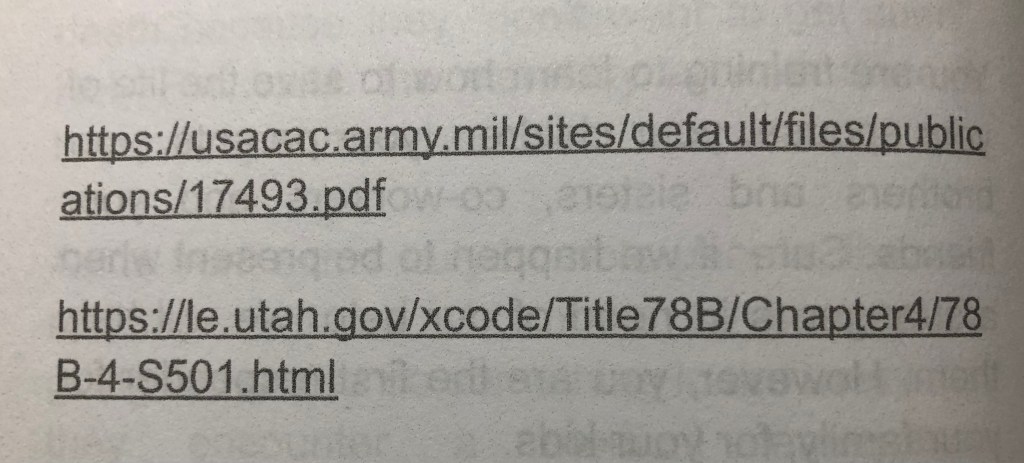
While I’m on the topic: because apparently some people need to hear this (namely the author I mention in the few paragraphs above about self-promotion), URLs don’t work in a print book.
Navigability.
What I mean by this is that I want the book to be cross-referential. This is one of the many good qualities of I Will Teach You To Be Rich by Ramit Sethi, which I recommended in my blog post on budgeting and still hold in high regard.
It’s honeycombed with parenthetical asides that both remind readers of the page numbers for topics that were covered earlier in the book and give them the option to skip ahead to chapters yet to come to learn more. For example, during his discussion of eliminating credit card debt, Ramit mentions on page 66 that a how-to on setting up automatic payments can be found on page 175.
I want to do something similar. For instance, in the chapter on buying a firearm for self-defense, I plan to point out that aspiring self-defenders are not bound to follow the steps in the order they are presented. Readers who are slow to commit or prefer to take a long time to research their purchases beforehand—or those eager to get their feet wet (and who are willing to spend some time and money to do so) but aren’t quite comfortable bringing a gun into their home for keeps right away—are encouraged to jump ahead to the chapter on training, Preparing to Seek Quality Instruction, and return if they are still interested in purchasing a firearm of their own after their first class.
An appreciation of the stakes and the potential consequences of bad information.
There are gravely serious ethical responsibilities associated with writing in this discipline—and with information on the topic of self-defense, period. When you tell a mother, ‘go ahead girl, you carry in that purse because it’s better than not having a gun at all’ and her child canoes their own head while rummaging around looking for candy, I believe that’s negligent. Yes, as always, at the end of the day all responsibility is personal, but half-assing this kind of project is unacceptable. Again, that reinforces the need for me to do the homework and fieldwork before broadcasting my opinions anywhere but on a reader-less blog.
Table of Contents
Below, I’ve embedded a working TOC; unfortunately, I couldn’t embed the PDF in a way that allows viewers to read the annotations. Still, you should be able to get a decent idea of what each section is about and the general structure I have in mind. If you have any feedback regarding organization, let me know!
To-Do List
There are a few boxes to check and milestones to reach before I can consider myself well-rounded, knowledgeable, and experienced enough to have sufficient credibility. Most of these goals have just as much to do with personal development as they do with appearing credible. Specifically, I want to have…
- Been promoted to least a blue belt in BJJ. This was the minimum competency standard recommended by Alex Sansone in his video on balancing breadth and specialization in defensive preparations.

- Attended John Hearne’s Who Wins, Who Loses, and Why lecture and Cognitive Pistol class. John’s work on human performance is a fixture of the modern defensive training landscape. He’s definitely on my instructor wish list.
- Attended Shivworks Extreme Close Quarters Concepts (ECQC) and Edged Weapons Overview (EWO). I’m signed up for ECQC in Pittsburgh from the 4th to the 6th of October later this year, so wish me luck!
- Taken more medical training and recertify in CPR/AED. I really can’t ‘do-as-I-say-not-as-I-do’ my way out of prioritizing the things I say we’re most likely to need as self-defenders. Perhaps I’m not searching as hard as I could be, but good TECC classes seem to be in shorter supply than quality firearms classes.
- Classified as an A-class shooter in USPSA. Given how my first ever match went on July 7th, this is a ballsy aspiration, to be sure. It may take years, but I’m looking forward to the grind.
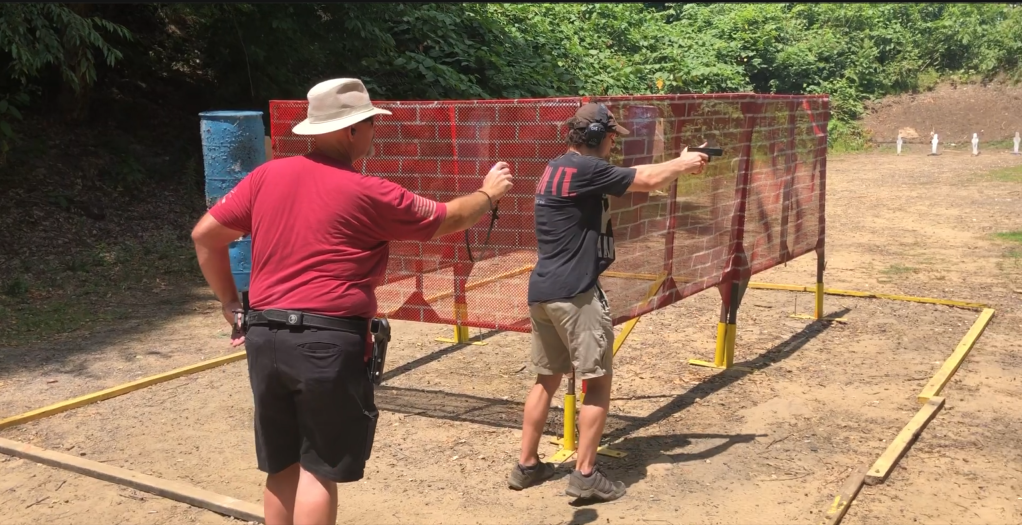
- Reached a higher objective standard of shooting performance. In particular, I’d like to have attempted and passed the FBI and Air Marshal qualifications, be able to clean dot torture at 3 yards consistently on demand, and reach certain metrics on other standardized drills and tests.
- Gained more familiarity with revolvers. While their price and comparative availability have made them relatively few and far between (I don’t think a single person has run a wheelgun at any class I’ve attended thus far), they are still a part of many individuals’ defensive toolkit. Learning to effectively run the heavy double-action trigger will not only improve my shooting overall, but give me firsthand knowledge of their quirks and idiosyncrasies. I’ve considered getting a Smith & Wesson UC J-Frame solely for these reasons, but the price tag and cost of .38 Special are hard to swallow.
Now, am I saying that anyone has to have done this, that, and the other thing before they can write a book on buying a gun and getting started with training? Absolutely not. To write the book that I want to, though, I feel these things are incumbent upon me.
I’ve even toyed with the possibility of a future in which I try to become an assistant instructor for someone, or pursue one of Rangemaster’s Instructor Certifications. That may sound ludicrous given my current level of skill, but hear me out.
I’ve had two or three people say I should become a college professor, and several ask whether I would consider teaching, given my English degree. I also have a lot of personal and professional experience with neurodivergent and LGBT people and have a good track record of making strangers feel comfortable. As the designated (but never evangelical) ‘gun guy’ among my close friends and coworkers, I’m probably not alone in having tried to give a welcoming NSSF First Shots-style experience to an acquaintance or two. Allowing these people feel safe enough with me to enjoy shooting for what was, for some of them, the first time in their lives, brought me great satisfaction.
Taking all of this into consideration, I might someday be called to get that teaching fulfillment by doing some form of Gateway Instruction as pioneered by Citizens Safety Academy. In their own words, this is the teaching of “true entry-level content, designed for students who’ve overcome boundaries, obstacles, social disincentives, or other adverse odds to learn to shoot for the first time.” It would give me an excuse to continue being a lifelong student, and that’s what would really make me happy.
Thanks for reading!
…and my apologies for the slight hiatus since my last post: between starting a new full-time job in a different industry, navigating a drastic BJJ schedule change, continuing to squeeze in my part-time job, and committing to a new relationship, I’ve been preoccupied, to say the least.
With that being said, I have two blog posts in the pipe: a short-form product review of a popular firearms storage solution, and a discussion about defending pets with lethal force.
What else would you like to see in the future? Let me know in the comments.
 Fire Carrier Defense